 HoneyFil®
Start with serving size, not the ingredient list
Almost everyone reads a supplement panel from the middle outwards, scanning for recognisable ingredient names. That is the wrong entry point. The two lines at the top of the panel — serving size and servings per container — reframe everything below them.
Serving size tells you how much product the amounts below correspond to. If it says "Serving size: 2 gummies," then every figure underneath is for two gummies, not one. A product advertising an impressive amount of some ingredient may be doing so across a serving of four capsules.
Servings per container tells you how long a bottle actually lasts. A bottle of 60 gummies at a serving of two per day is a 30-day supply, not a 60-day one — and that halves the value of any price comparison you were about to make.
Two products can advertise identical ingredient amounts while one asks for one capsule a day and the other asks for four. They are not the same product, and they are not the same price.
Everything below is per serving
Once serving size is fixed in your mind, the amount column becomes meaningful. Every figure is per serving, expressed in milligrams, micrograms or International Units.
Watch the units carefully. Milligrams (mg) and micrograms (mcg or µg) differ by a factor of a thousand, and they sit next to each other on the same panel. A number that looks generous in mcg may be modest, and vice versa.
The %DV column, and what a blank one means
The right-hand column shows Percent Daily Value — how much of the established daily reference intake one serving provides. It exists for vitamins and minerals, which have official reference values.
Where you will see a dagger symbol (†) or a blank instead is against botanicals, amino acids and other compounds that have no established Daily Value. This is normal and is not a warning sign in itself. It simply means no official reference intake exists for that substance — which also means the panel gives you no yardstick for whether the amount shown is meaningful.
Ingredients above 100% DV are worth a second look. That is not automatically a problem — many water-soluble vitamins are routinely included well above 100% — but fat-soluble vitamins (A, D, E, K) accumulate in the body, and several hundred per cent of the daily value across multiple supplements at once is worth raising with a healthcare professional.
Proprietary blends: what they actually hide
A proprietary blend appears as a group of ingredients sharing one combined weight:
What a proprietary blend looks like
| Example Blend (illustration only) | 1,200 mg † |
|---|---|
| — Ingredient A, Ingredient B, Ingredient C, Ingredient D | — |
Regulations require ingredients within a blend to be listed in descending order by weight. That is the only thing you learn. The first-named ingredient could constitute 1,190mg of that 1,200mg total, with the remaining three sharing 10mg between them — a practice sometimes called fairy dusting, where a small amount of an impressive ingredient earns a place on the label without being present at any meaningful level.
The stated justification is protecting a formula from competitors. In practice, formulas are straightforward to reverse-engineer through laboratory analysis, so the protection is mostly from consumers rather than from competitors.
A proprietary blend is not automatically disqualifying. But it does mean you cannot evaluate that portion of the formula, and you should price the product accordingly.
Forms and extract ratios
The parenthetical detail after an ingredient name usually matters more than the ingredient name itself.
Mineral forms. "Zinc (as zinc oxide)" and "zinc (as zinc bisglycinate)" are both zinc, but they are not equivalently absorbed. Oxide forms are cheaper and generally less bioavailable than chelated forms. The same applies to magnesium, iron and most minerals.
Botanical preparations. A botanical can appear as raw milled powder, as a concentrated extract at a stated ratio (10:1, 100:1), or as an extract standardised to a percentage of a marker compound. 500mg of raw root powder and 500mg of a 100:1 standardised extract are enormously different quantities of active material behind an identical number.
What good looks like: "Rhodiola Rosea Root Extract (3:1, standardised to 3% rosavins) — 300mg." That specifies the plant part, the concentration, the marker compound and the amount. Compare it with "Rhodiola — 300mg," which specifies almost nothing. The figures here are invented for illustration and do not describe any particular product.
The 'other ingredients' line
Below the panel sits a line listing everything that is not an active ingredient: capsule material, binders, fillers, sweeteners, colours and preservatives.
This line matters most for allergens and dietary requirements. Gelatin capsules are not vegetarian. Gummies typically contain sugars or sugar alcohols, and sugar alcohols can cause digestive discomfort in sensitive people. If you avoid particular colourings, this is where they appear.
It is also where you will find whether a product is genuinely free of a given allergen or merely does not add it deliberately — a "manufactured in a facility that also processes..." statement matters if your sensitivity is severe.
A ninety-second checklist
- Serving size — how many units make one serving?
- Servings per container — divide, and recalculate the true price per day.
- Any proprietary blends? If yes, that portion cannot be evaluated.
- Mineral forms — oxide, or chelated?
- Botanical preparations — raw powder, or standardised extract at a stated ratio?
- Other ingredients — allergens, sweeteners, capsule material.
- Is there a lot number and expiry date? If not, ask why.
When the panel isn't available
Increasingly, products are sold through pages that show the ingredient list without the full panel. That is a meaningful gap, not a formatting oversight — the panel is where the amounts live.
If a product page does not display a legible Supplement Facts panel, ask support for a photograph before buying. It is a reasonable request and takes a company thirty seconds to fulfil. How they respond tells you a great deal, and it costs you nothing to find out.
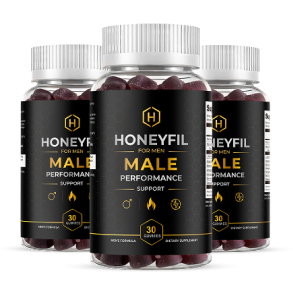
One gummy a day. That's the whole routine.
HoneyFil is a once-daily men's vitality gummy formulated to support circulation, sustained energy and stamina as part of a healthy lifestyle — without harsh stimulants and without a subscription.
Order HoneyFilOne-time purchase · 60-Day Satisfaction Promise · Free US shipping on 3+ bottles
Frequently asked questions
Serving size states how much product — how many capsules, gummies or scoops — the amounts listed below correspond to. If the serving size is two gummies, every figure on the panel is for two gummies, not one.
A group of ingredients listed under one combined weight rather than individually. Ingredients must be listed in descending order by weight, but the actual amount of each is not disclosed, so that portion of the formula cannot be evaluated.
A dagger (†) or blank in the %DV column indicates that no Daily Value has been established for that ingredient. This is normal for botanicals and amino acids and is not a warning sign, though it does mean the panel offers no yardstick for the amount shown.
Different chemical forms of the same mineral are absorbed differently. Oxide forms are typically cheaper and less bioavailable than chelated forms such as bisglycinate or picolinate, so the parenthetical form is often more informative than the amount.
Ask customer support for a photograph of the current panel before buying. It is a reasonable request that takes seconds to fulfil, and the response itself is informative.