 HoneyFil®
Gummy vs capsule: the real trade-off
Format is usually treated as a preference question. It is closer to an engineering one, with a genuine trade-off in both directions.
The case for gummies is adherence, and adherence matters more than most people credit. A supplement only works if taken consistently, and a substantial share of adults dislike swallowing capsules enough to quietly stop. A gummy removes that friction, and consistency over 90 days beats a superior formula taken half the time.
The case against gummies is capacity. A gummy base — pectin or gelatin, plus sweetener and flavouring — occupies most of the unit's volume. That physically limits how much active material a gummy can carry compared with a capsule of similar size. Gummies also typically contain sugar or sugar alcohols, which matters if you monitor blood sugar, and they are somewhat less stable in heat and humidity.
Choose a gummy if you would realistically skip capsules. Choose a capsule if you want maximum active material per unit and you will actually take it. Both answers are defensible; pretending there is no trade-off is not.
Check label disclosure before anything else
Before ingredients, before price, before reviews: can you see a full, legible Supplement Facts panel with individual amounts for every active ingredient?
If yes, you can evaluate the product. If the amounts sit inside a proprietary blend, or the panel is not shown at all, then you cannot — and no amount of persuasive copy changes that. Our guide to reading a Supplement Facts panel covers the mechanics.
If the panel is not on the page, ask support for a photograph. It takes them seconds. The speed and completeness of the answer is itself a data point, and it costs you nothing to collect.
Read the claims language carefully
Dietary supplements in the US may make structure/function claims — statements about supporting normal bodily functions. They may not claim to treat, cure or prevent disease. Learning to hear the difference filters out a lot.
Two registers
| "Supports healthy circulation" | Permitted |
|---|---|
| "Treats poor circulation" | Not permitted |
| "Supports normal energy metabolism" | Permitted |
| "Cures fatigue" | Not permitted |
| "Traditionally used to support stamina" | Permitted |
| "Increases testosterone by 47%" | Not permitted without substantiation |
A company willing to cross that line in its marketing is telling you how it treats rules generally — including the ones governing what goes in the bottle.
Also treat specific numeric outcome promises with suspicion. Precise figures — a percentage increase, a number of days — imply finished-product trial data. Ask whether that data exists for the product, not for its individual ingredients. For most supplements the honest answer is that it does not, and there is no shame in that, only in implying otherwise.
Check the billing model before you reach checkout
This causes more genuine consumer harm in this category than any ingredient does.
Look for: autoship or subscription enrolment applied by default; a pre-ticked box; a "trial" that converts to full-price recurring billing; language about a "membership" or "VIP" pricing tier. A one-time purchase should say so plainly and unambiguously.
If you do enrol in a subscription, note the cancellation method before ordering. Under the FTC's rules on negative-option marketing, cancelling should be as easy as signing up — but knowing the route in advance saves a difficult phone call later.
Read the guarantee properly
"60-day money-back guarantee" is a headline, not a term. Four details determine what it is worth:
- When does the clock start? Purchase date or delivery date. Purchase-date windows are shorter in practice, since shipping consumes part of them.
- Are opened bottles accepted? A guarantee requiring unopened product is not a trial offer.
- Who pays return shipping? Usually you. Reasonable, but worth knowing.
- Does the window cover the assessment period? If a product recommends 90 days to judge it and offers 60 days to return it, those numbers do not line up. Start immediately and decide before the window closes.
Six checks before buying
- Full Supplement Facts panel with individual amounts, visible before purchase
- Structure/function language, no disease claims or precise outcome numbers
- One-time purchase clearly stated, no default autoship
- Guarantee terms: clock start, opened bottles, return shipping
- Manufacturing: USA cGMP facility, third-party testing available on request
- Reachable support that answers a direct question directly
Red flags worth walking away from
- Countdown timers that reset. Reload the page. If the timer restarts, the urgency is manufactured.
- Invented scarcity. "Only 7 bottles left" on a page with no inventory system behind it.
- Fabricated reviews. Stock photography attached to testimonials, identical phrasing across reviews, or a wall of five-star ratings with no negatives. Fake reviews are unlawful under FTC rules, and a company willing to fake them is signalling something.
- Fake media logos. "As seen in" rows are trivial to fabricate. Check whether the coverage exists.
- Doctor endorsements you cannot verify. Look for a real, findable practitioner with a real practice.
- Conflicting product information. If a page says capsule and the bottle says gummy, or two pages list different ingredients, that is a quality-control signal beyond the copy.
- No physical address or company entity. If you cannot tell who you are buying from, refunds are theoretical.
What to ask your doctor
Worth doing before you order, particularly if you take anything prescribed. Bring the ingredient list — a photograph of the panel is ideal — and ask:
- Does anything here interact with my current medication?
- Is anything here inadvisable given my medical history?
- Should we test anything first — thyroid, vitamin D, testosterone, iron — before I try a supplement?
- Is there anything about my fatigue or symptoms that should be investigated rather than supplemented?
That last question is the important one. Supplements are a reasonable addition to a healthy routine. They are a poor substitute for finding out why you feel the way you do.
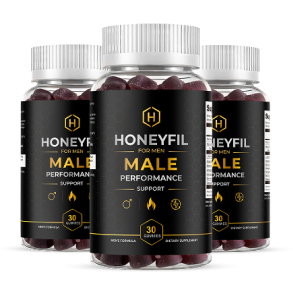
One gummy a day. That's the whole routine.
HoneyFil is a once-daily men's vitality gummy formulated to support circulation, sustained energy and stamina as part of a healthy lifestyle — without harsh stimulants and without a subscription.
Order HoneyFilOne-time purchase · 60-Day Satisfaction Promise · Free US shipping on 3+ bottles
Frequently asked questions
They involve a genuine trade-off. Gummies improve adherence for people who dislike swallowing capsules, which matters because consistency drives outcomes. Capsules carry more active material per unit because a gummy base occupies most of the volume, and gummies typically contain sugars or sugar alcohols.
Resetting countdown timers, invented scarcity, fabricated reviews and media logos, unverifiable doctor endorsements, default autoship enrolment, conflicting product information across pages, and no identifiable company or physical address.
Ask support for the current Supplement Facts panel and a certificate of analysis for your lot. A company that answers promptly and completely is demonstrating something no marketing copy can. Check also that the billing model is a clearly stated one-time purchase.
Whether any ingredient interacts with your medication, whether anything is inadvisable given your history, whether any testing should come first, and whether your symptoms warrant investigation rather than supplementation.
Not automatically, but it does mean the amounts of individual ingredients within that blend are undisclosed, so that part of the formula cannot be evaluated. Price the product accordingly.